Do you experience sudden, sharp shooting pain while eating ice cream? Do you wake up at night with throbbing pain in your tooth? Do you get sudden swelling around teeth out of blue? Well these are some of the signs which suggest, you require a dental treatment commonly known as RCT ( root canal treatment )
Today, we are going to see when you require root canal treatment, but before that, let’s understand the anatomy of teeth.
The tooth is made up of three layers.
Outermost is called enamel. This enamel is formed by hydroxyapatite crystals and it is the strongest substance in the human body. (Stronger than bone )
The second layer is called Dentine. This Dentine is made up of dentinal tubules and these micro dentinal tubules contain nerve endings. The Dentine is resilient and softer than enamel.
The innermost layer is known as pulp. This pulp is vital to tissue, contains blood vessels, nerves, and connective tissue. It gives vitality to a tooth, pulp provides nutrition to the tooth during development.
When decay starts, it involves the outermost layer first. Microorganisms that are attached to the tooth surface, secrete acids and these acids dissolve hydroxyapatite crystals and decay starts at the enamel level.
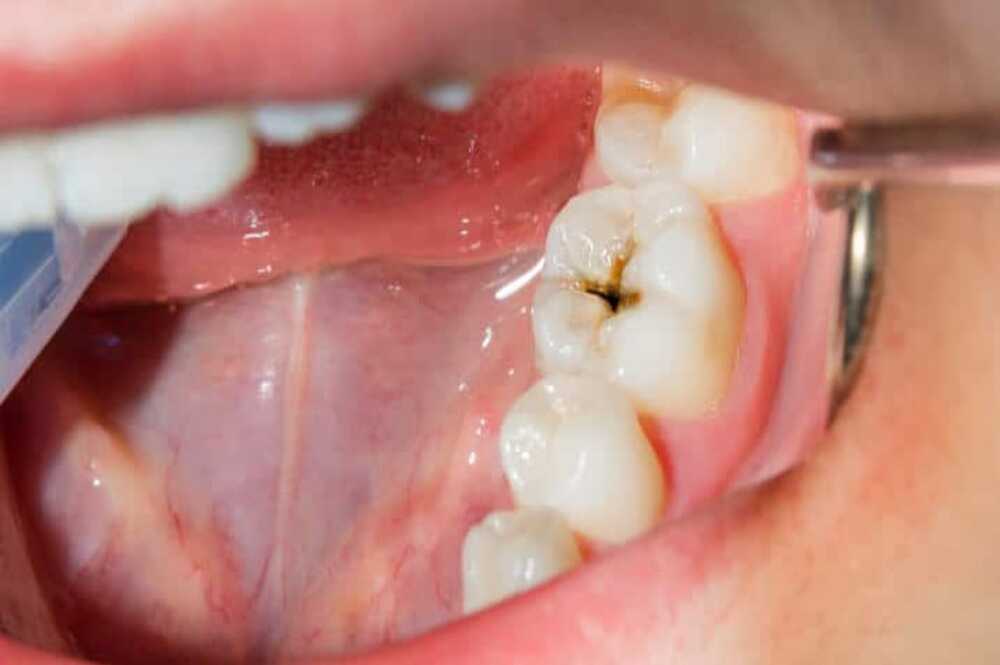
As there are no nerves in enamel, there are no signs of pain. But black spots appear on the tooth. Whenever you see the black spots on teeth, it’s the right time to visit a dentist for a check-up and do the necessary treatment. These black spots on teeth are the first indication of decay, and if treated in time, avoid further treatment of the root canal.
The dentist will remove this decay, clean the cavity and fill it with a tooth-colored restorative material. If left untreated, the decay involves Dentine and quickly propagates towards pulp.
Let’s see some conditions which require root canal treatment.
1) Sensitivity to hot and cold:-
This is the most common reason when patients visit the dentist. Sensitivity to hot, cold & sweet is usually indicated of reversible pulpitis. When decay reaches a pulp, it provides the pathway for microorganisms and another stimulus to reach to nerves. Change in temperature is acting as stimulation to nerves and pain starts. Once this stimulus is removed, there is no pain this reversible pulpitis is the first indication, the tooth may require root canal treatment.
2) Pain at night. :-
Symptoms of sensitivity if ignored lead to tooth pain while sleeping. This happens due to a change in the hydrodynamic structure of pulp tissue. This typical sign is a clear indication that suggests decay has reached nerves and definitely requires root canal treatment.
3) throbbing continues pain:-
Once decay reaches nerves, it also provides a path for microorganisms and other toxins to reach nerves. These microorganisms and toxins cause inflammation of nerves and throbbing pain starts. This is a very disturbing pain, which won’t allow the patient to do anything. Even after taking anti-inflammatory medicines, the pain stops for a while and again reappear.
At this stage, root canal treatment is a must.
4) Swelling associated with tooth:-
Sometimes, there is sudden swelling appears and associated with decayed tooth/teeth. This is a painful condition. In this case, the pulp is degenerated ( dead ) due to microorganisms reaching the pulp. This dead pulp ( necrosis ) Provides the pathway for microorganisms to reach the end of the tooth, and it reaches the bone. Microorganisms grow in the bone and form pus. This accumulation of pus leads to Swelling. Swelling is usually very painful and requires immediate attention and treatment.
Sometimes, there is small swelling associated with the tooth, and there is a sinus that drains the pus. In this case, there is no pain associated. Because whenever pus accumulates, it gradually drained through this sinus and the patient never feels any pain. But this tooth also requires root canal treatment. These are some of the most commonly appearing signs which require root canal treatment. You can see the video about root canal treatment here
Frequently Asked Questions
1. What are the common signs that I need a root canal?
Sharp pain, sensitivity to hot or cold, pain at night, swelling, or throbbing continuous pain are the most common signs that indicate the need for a root canal.
2. Does tooth sensitivity always mean I need a root canal?
Not always. Early sensitivity may be reversible, but if it increases or lasts longer, it could mean the decay has reached the nerves and may require an RCT.
3. Why do I feel severe pain at night?
Night pain usually indicates the decay has reached the pulp nerves. This is a strong sign that a root canal treatment is needed.
4. Can swelling around a tooth mean infection?
Yes. Swelling is often caused by pus formation due to infection inside the tooth. This requires immediate dental attention and usually a root canal.
5. What happens if I ignore tooth decay or pain?
Ignoring decay allows bacteria to reach the nerves, causing infection, severe pain, or swelling. This can lead to more complicated treatment or tooth loss.
6. Can a tooth need a root canal even if there is no pain?
Yes. Some infected teeth develop a sinus tract that drains the pus, causing no pain. But the tooth is still infected and requires an RCT.
7. Are black spots on teeth a sign of decay?
Yes. Black spots often indicate the beginning of decay. Early detection can prevent the need for a root canal.
8. Is root canal treatment painful?
Modern RCT is painless and comfortable. Dentists use anesthesia and advanced techniques for a smooth experience.
9. How soon should I visit a dentist if I notice symptoms?
Immediately. Early treatment can save the tooth and prevent infection from spreading.
Also, read more about root canal treatment
For appointment, you can always contact Microdent Dentistry.
Address: Ground Floor, block 4, Sarvadarshan Housing Society Opposite. Saraswat Bank, Nal Stop, Karve Road, Kothrud, Pune, Maharashtra 411004
Contact Us: tel:7264008000 tel:9021681032
Find our clinic: Get Direction